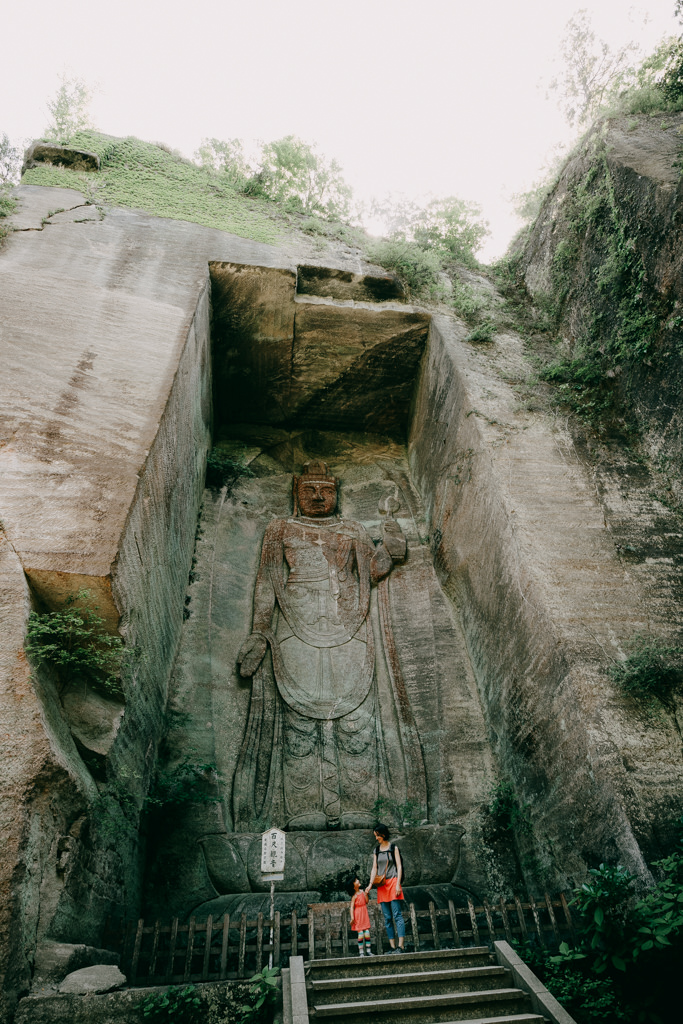
Nokogiriyama (Mt. Nokogiri), Chiba
Nokogiriyama (鋸山), meaning “sawtooth mountain,” is a low mountain in Chiba Prefecture known for its jagged, rocky cliffs, sweeping views, and Buddhist temple complex carved into the rock. Easily accessible by ropeway, it makes an excellent day trip from Tokyo for those who enjoy a combination of natural scenery and cultural heritage.
The mountain was once an important stone quarry during the Edo period, and remnants of its past can still be seen in its dramatic rock faces. Another highlight is Nihonji Temple, founded approximately 1,300 years ago. The temple grounds feature an enormous Buddha carved into the rock and the famous Hyaku-Shaku Kannon, a relief of the Buddhist deity carved into a towering cliff face. This area is also home to monkeys, deer, and wild boars, which you can spot along the trails if you keep quiet.
We recommend taking the ropeway up and hiking back down. There’s also a lesser-known trail called the Adventure Course, but we wouldn’t recommend it, as it involves scrambling over boulders, and some sections have been damaged by recent typhoons, making them potentially unsafe without proper equipment.
Nokogiriyama is particularly popular during spring and autumn. Although it rarely feels overwhelmingly crowded, we recommend visiting on a weekday during these seasons, if possible, to enjoy the temple grounds and mountain trails in a more peaceful atmosphere.
Getting there from Tokyo
Nokogiriyama is approximately one hour from central Tokyo by car via the Tokyo Bay Aqua-Line, making it a convenient destination for a day trip.
By train, the journey from Tokyo Station to Hama-Kanaya Station takes around two hours on a direct rapid train. From the station, it’s about a 10-minute walk to the Nokogiriyama Ropeway, which takes you up the mountain. For a more scenic return journey, consider taking the ferry from nearby Kanaya Port across Tokyo Bay to Kurihama on the Miura Peninsula. The crossing takes around 40 minutes, followed by approximately 80 minutes by train from Kurihama Station to Tokyo Station. It’s a pleasant alternative to retracing your route by train and offers a different perspective on Tokyo Bay.